Sunday, October 10, 2021

On the Absence of Conscience in Man, or, My Life Among the Heathens


Human beings generally lack conscience in any real form. Conscience can only arise from real suffering; and until a person is unified within being, there is no real suffering. 


Real suffering is a force that applies itself only to real being. The casual suffering that we encounter as an automatic and ordinary fact of life is real within the limits of its own actions; but its action is always an external one and not the result of a struggle within one’s own will, one’s own identity and one’s own existence. It forms itself exclusively around outer things, and the ego takes it personally.


We all know how this is. Yet for as long as we’re divided inside, it’s impossible to see the action or to understand the difference between the action of outer suffering –which needs to be allowed to take place as it is, along with ordinary emotional reaction — and the action of inner suffering, which must not be allowed to take place casually and in the absence of our participation. 


Inner suffering is the place where the soul is formed.


From this point of view, we don't even know what a soul is — and yet we profess to have one. The soul is not a casually acquired entity. It is clawed and sorted out from the soil of our lives fragment by fragment, and refined in a fire that only we ourselves can tend. Of course every entity acquires something of this kind by the end of its life; yet it is the way that it’s formed that makes a difference, and we don’t see that when we’re alive.


If human beings had real conscience, none of what takes place on the planet would go as it goes now. Real conscience, properly formed, contains a respect for other beings within it which no other force can provide. All of the outer forces mankind has invented to regulate its behavior are ersatz forces, substitutes that one wallpapers over the real situation with. It’s like thick plastic duct taped over a window in place of glass; it keeps the wind out and lets a little light in, but one can’t see in through it; and what is inside equally can’t see outward. All of the seeing of truth that conscience might provide is reduced to a simulation in which only imagination is functional. We imagine we are compassionate; we imagine we care about others and feel this way or that way. In reality, all of these forces in us are terrifically weak, first of all because there is no transparency.


The emphasis on acquiring real being is essential because conscience — real conscience — cannot be based on anything other than real being. The results of one’s manifestations and the consequences thereof must become absolutely real to a woman or a man in order for them to do any real suffering; and everything in us is arranged to avoid seeing our manifestations and their consequences. Everything becomes a rationalization; everything is an excuse. If we were to truly look these things in the eye, we would see how awful the situation actually is. This would disturb us; and we are arranged inside to avoid every kind of disturbance. We hypnotize ourselves with the sense that we are okay and everything is okay. We Disneyland everything by turning life into a theme park. Okay-world. La la land.


Gurdjieff asked his pupils to examine the past with care and to begin to suffer, instance by instance, with the truth of how we have behaved and the way we’ve been in the past. The aim of this isn’t to destroy ourselves through negative criticism and destructive introspection; rather, the aim is to engage emotionally with the truth, which can become a therapy for the soul whereby it has at least a chance to heal itself through truth. This is the opposite of buying into the lies we tell ourselves, the comfortable lives we would like to lead.


It doesn’t mean that there is no tranquility available; merely that we cannot understand tranquility as we are.


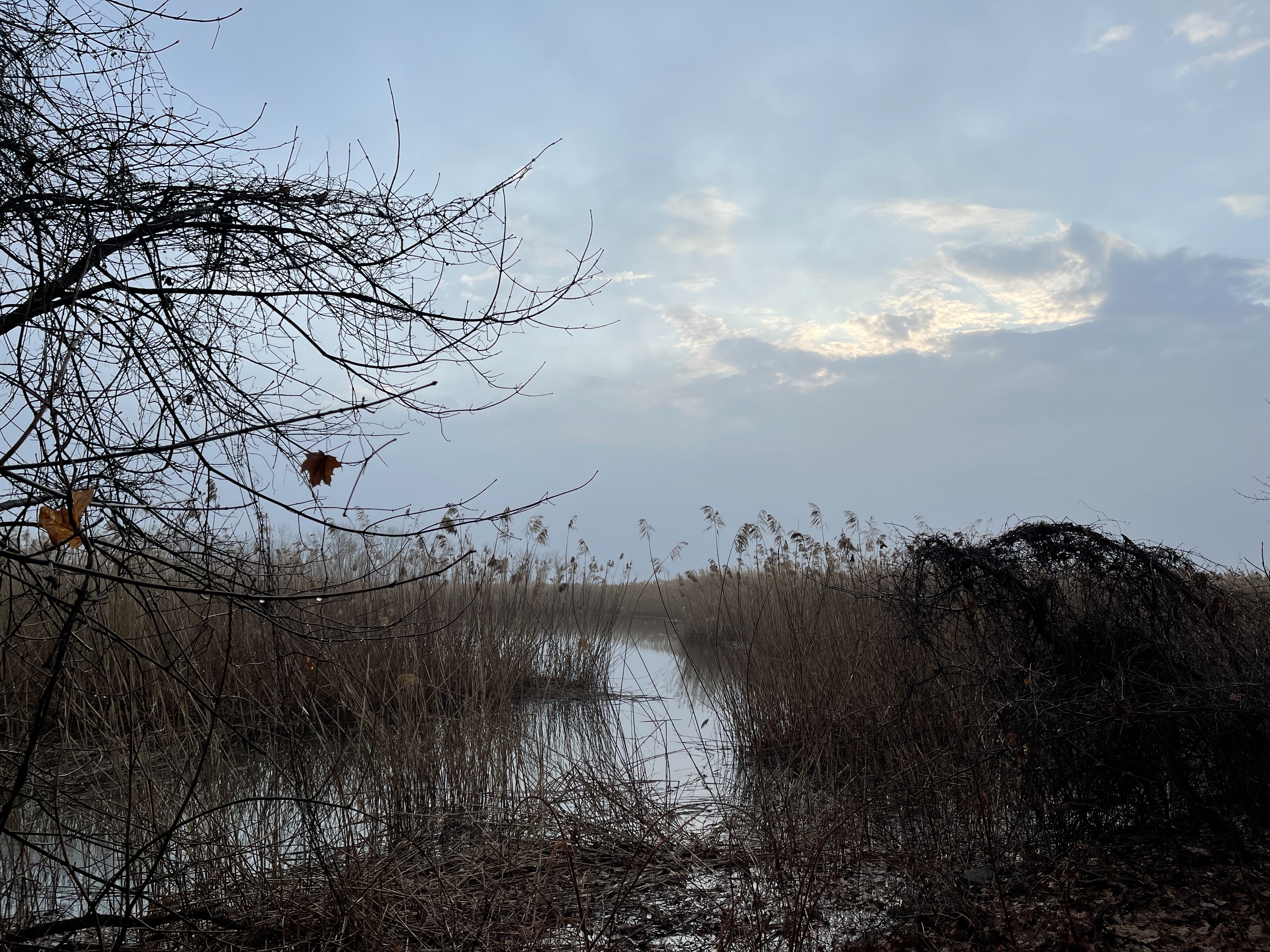
I refer to life among the heathens. The word is derived from the German Heide and approximately means, life among the open countries, the heath. Conventionally, the word indicates those who are members of pantheistic religions or who have no religion at all.


This can be easily likened to those who believe whatever they want, or whatever other people tell them. Gurdjieff advised his students to recognize that 2×2 = 4; but in the world of the heathen, 2×2 equals anything you want it to — or anything the next person says it does. It is, in other words, an entirely subjective realm; an open country in which you can wander in all directions without obstacles, but which has no features to distinguish it. The heath is a big, beautiful open space, but there’s no food for real humans there. For bees, insects, perhaps; but for the purposes of life and of humanity, it serves little. 


It isn’t quite barren: plants grow there, so we can’t equate it to the desert. The desert would be a better place, because at least there the severity and austerity, the lack of water, the presence of nothing but rocks and sand, plants with thorny exteriors, would serve as a stunning reminder of our lack. The heath puts us to sleep with a sweet scent and a lovely field of colorful tiny flowers. We forget that there isn’t much real there for us. It allows us to project our imagination onto it and pretend that it can serve us well.


Leaving the meadow analogy aside, I refer to the lack of conscience as “life among the heathen” because I am a member of an organized religion – Christianity. Those who would prefer to expunge this element from Gurdjieff’s teaching are bound to misunderstand it, because it’s central. It just bears far more relationship to the transcendental Gnostic mysticism of Meister Eckhart’s Christianity than that of the religion that renders God, as Gurdjieff calls him, as “an old Jew with a beard.” The phrase is reminiscent of Zen Buddhism’s reference to “red-bearded barbarians.” 


Personifications. Opinions.


The question arises here of whether conscience can arise or exist in the absence of a form. It cannot; feeling arises in context, and real feeling must arise in real context. The difficulty here is that if we have no real context, no real being, there is no real feeling. The form is not an exterior form; it is created within us by ourselves. We must become wholly responsible for it if we have a real wish. 


This is a very practical activity that has nothing to do with philosophy. It is the tension of bone against bone and the infusion of blood by marrow that brings us to this activity: the living, breathing sensation of our own being, which alone can remind us both of our existence as we are here, now, and our mortality in the brief light of our rather short existence. 


Those things might remind us of something true; and from there, we might begin to know something and feel something real, rather than believing in that which is not—but for the fact that we pretend it is so.


May you be well within today.


Lee

Lee van Laer is a Senior Editor at Parabola Magazine.

Thursday, October 7, 2021

A Sense of the Planet, Part II


People speak of planetary influences as though they're something that’s far away and theoretical.

But if you have a good attention, you’ll see when you drink a glass of water that you’re under planetary influences. Your whole organism can be attuned to the inward flow of that influence in the water and the swallowing of it. If you’re receiving the higher energy properly, a whole range of energetic influences will be received and interact with each food you eat.

Drinking a glass of plain water can be a practice. Pay attention! Once you understand this in your organism, then you’ll understand something real about the planet we’re on. Not something built of dreams.

When you breathe the air, you’re also under planetary influences. Again, if you have a good attention in your body, you’ll understand this. Otherwise the matter in you that’s meant to receive higher influences, a higher rate of vibration, will be deadened. You’ll live, but you won’t receive any of the support that the planet is interested in giving you. 

It’s as though a meal is being served right in front of you now and you ignore it and walk away because you imagine there will be better food somewhere else, later. In fact the food you’re being served is already unfamiliar to you. It’s the basic higher food of the planet itself, and your participation in its presence. 

This is a different relationship to life than the ordinary one; but it is a correct a relationship, and if you don’t seek a correct relationship, you won’t ever actually know where you are, and what you're doing.

May you be well within today.


Lee

Lee van Laer is a Senior Editor at Parabola Magazine.

Monday, October 4, 2021

A Sense of The Planet


If I become more whole; if I sense, I feel, I think together; eventually I become a whole creature, not a series of fragments which collide with one another all day long.


Then perhaps I begin to organically see that I'm a creature on a planet. 


Not just any planet; this is a planet engaged in a vast experiment with chemistry, creating extraordinary and exotic compounds and recombining them in trillions of ways in every second. 


This planet is a living thing; and I am a part of it. Every instant of my life is an act of chemical engagement that integrates me completely with the life of the planet itself.


This is a different sense of Being than the one that sentimentalizes nature and thinks about the poor planet and the way we are destroying it — which is unfortunately quite true. Our attitudes towards the planet when we are partial are attitudes of the body, the intellect, the emotions, all separated and not infrequently in conflict with one another. We mistake each one of them for a “real” sense of what it means to be on the planet. 


None of these is a real sense of what this means. Each one inflects our perception of conditions according to its own perspective, which is incompletely formed.


If I have a true sense, a real sense, of my whole Being, the question that immediately arises is one of my responsibility to this planet, how I participate in its whole presence in any given moment. These moments are alive and filled with a truth that transcends me as an individual: I have a duty towards the planet that begins within myself and must be upheld honorably and with a great attention. 


If I have this sense, already, everything about my attitude to the planet is quite different. I have legs; I don't crawl to understanding like some lower animal, but walk to it upright and with a sense of wonder. 


This is why men became vertical creatures walking on two legs; and yet we have forgotten it.


We need to overcome the romance of the planet and its beauty and attend to the reality of the planet and our participation  in its life.


May you be well within today.


Lee

Lee van Laer is a Senior Editor at Parabola Magazine.

Friday, October 1, 2021

Good Leather


A little post for my birthday, which was — unlike the vast majority of material in this space, even the other birthday post— written today, on the day I post it.

The other day, a friend of mine reminded me of Gurdjieff’s comment, “I have good leather to sell, for those who wish to make shoes.”


Shoes, of course, are what we put on our feet, the lowest part of our body, in order to support our contact with the earth. They provide both support and protection from that contact, which, while absolutely necessary, can be rigorous and demanding. If one wants to travel the surface of the planet, shoes are a necessity. 


If we want to get through life, we need a good pair of shoes on our soul as well as our feet.


Leather, of course, is from the skin of another animal — gained through the suffering and death of another, and appropriated for our own use. We can obtain this either callously or with gratitude for the sacrifice that the other being made to provide this important material.


The allegory of the shoes reminds me of the paintings of Hieronymus Bosch, which for the greater part center around the travels of the wayfarer, a pilgrim or journeyman through life. Not only does he feature prominently in multiple paintings, he's also often present in the background of paintings, playing out tiny dramas that seem completely disconnected from the intense and complex symbolism of the foreground.


Yet each one of these images provides a thread that sews the theme of all the paintings together; the fabric is stitched, the pieces are connected, by the idea of moving through life, traversing a huge landscape, filled with extraordinary things, which are to be perceived as wonders and digested as facts at the same time. I say this because the paintings, as extraordinary and inexplicable as they seem to be, are indeed facts and present the fantastic right there in front of us as a fact, even if it seems to be a fantasy. 


There are sophisticated philosophical questions raised by this action which I believe the artist was well aware of when he undertook the paintings. The late medieval and early Renaissance mind was as acutely sophisticated and aware of irony as we are today; and Bosch knew irony, for sure. In the midst of his hells his humor always shines through. 


This, I think, is how we should be, as well.


Anyway, this is just a brief thought for readers. If you have a chance, browse through the extensive collection at the Bosch project site and look for the wanderers, all of whom need good shoes to wend their way through the incredible places that Bosch has created. If there were ever paintings of the holy planet purgatory, these are the paintings.


Wishing you all the best on this, my 66th birthday.


Lee


The Body and Blood


Formal family portrait with my sister Sarah
Hamburg, circa 1964

Today is my 66th birthday.

  Most folks think of inner things as being psychological. They aren’t. Psychology is a bleb growing on the outer skin of the soul. 

Everyone thinks the bleb — a little growth, a skin tag filled with blood —is the body and not just an accidental appendage. But we live, in our innermost soul, within the body and the blood of Christ, and this is an extraordinary secret which few ever come into contact with.


In order to come into contact with it, you have to become an animal. 

Once one comes into contact with the animal, paradoxically, inwardly forms an intimate relationship with it, the body and blood of Christ have a place to manifest. 

Then what is within us becomes quite different; and although the bleb is exactly the same and we still pump so much of ourselves through it, it’s no longer the center of gravity.


May you be well within today.


Lee

Lee van Laer is a Senior Editor at Parabola Magazine.


Thursday, September 30, 2021

Animals


Marlowe


March 19, 2021


In our ordinary state, we are animals who think we’re human beings. 

It would be better if we were human beings who knew we were animals.


If that were the case, we'd truly know something, because our organic conscience would then already be awakened. But our organic conscience is buried; under ordinary circumstances we have absolutely no contact with it. The ego has created a substitute conscience within the surface waters of our being, which changes with every ray of light that is reflected from it. It doesn’t absorb the light from within and use that for its work; it only takes light from outside, like a parasite, which costs us nothing and causes us to be as casual with our conscience as a drunken sailor spending his money as he goes from one bar to another. 


In this manner, our conscience gets us exactly what we want: but all we want is to be a drunkard. That is to say, we wish to serve only ourselves; and this is one of the esoteric meanings of Gurdjieff’s use of the term masturbation, which actually has nothing to do with the sexual act, even though it consistently sounds like it. Masturbation is a function of the ego, and it is a function that takes place in what we call the “conscious” state. Association has a great deal to do with masturbation, and this can be better understood from a practical (not psychological) point of view if one studies it more carefully.


Let’s change gears here for a moment and discuss the function of association. Association is very nearly random and operates at light speed. It functions in nearly exactly the same way as a computer does, that is, absolutely mechanically. It consists of the database. When any impression comes in, association automatically and instantaneously compares it to thousands, even tens of thousands or perhaps millions, of other impressions it has stored. What it connects that impression can depends on a number of factors, including what happened just beforehand, with previous impressions have the strongest correspondence, and accident. Previous impressions have the strongest influence, but accident is the predominant form of collision between an immediate impression and its predecessors. It simply a matter of random chance whether the strongest influence happens to pop up first. 


Typically, an impression brushes up against some one or two dozen previous collections of impressions in the first instant and there is always one that has a stronger influence. This is the one that the incoming impression binds to. Again, one can see this function if one has a fortunate moment of insight. Because of the speed of the process, it’s impossible to be there with it all the time; the point is that one has to have an immediate and practical experience of this question in order to understand just how random and mechanical are function of association is. From there we can begin to more strongly reject the immediate effect of associations and step back from them. To be suspicious of them. Taking one step back always allows the possibility for the contact with further material, some of which will usually be better formed than the accidental connections. The issue here, of course, lies in the fact that for most of us we have many mistakenly reinforced impressions — and the more we fall under the influence of the outside world and other people, the more we are likely to have a group of mistaken or broken impressions which reflect lies other people have constructed and fed to one another. Hence the title of my song, “Other People’s Lies.”


Let’s go back to the question of being an animal. We are not human beings. As we are, we are feral. Everything in us responds to animal desire, which is not been trained to do anything other than to get what it wants for itself. A human being begins this way as a child. There is a touching innocence to that state, because it is a rightful state from nature’s point of view and each animal inhabits it without prejudice and according to law. However, because of the intellect, human beings inhabit the state with increasing prejudice in every moment that they exist; and this deviates more and more from any lawful infestation other than the law of egostic selfishness, which is really a kind of summary “anti-– law” belonging to the set of 24 laws that manifest themselves as oppositional law on this level.


So we aren’t even animals. We are animals who have run wild from the state of being animal and substituted it with a different, more malevolent state that cares only about itself, in an intellectual way that permits it to do intentional harm to others, including other humans, all animals, plants, the environment, and the planet itself. Animals are capable of such action. We dream we are human beings but we are not even close to that state as we are. A human being suffers the consequences of their actions from within through the force of a properly matured conscience; and this puts a moral constraint on them far more powerful than any exterior force could create. Yet in our dreams, because we have convinced ourselves that we are “human beings,” we excuse anything we do without care.


The human being who knows they are an animal has developed a respect for that half of their being; and it changes the way we are in relationship both with ourselves and the world.


A human being begins to understand how to suffer.


 May you be well within today.


Lee

Lee van Laer is a Senior Editor at Parabola Magazine.

Monday, September 27, 2021

Being a Real Idiot


March 16.

Going back over the things I write, it occurred to me yesterday that I have shamelessly complex thought processes which most others are (perhaps, after all, for the best) not interested in following. 

For this, I apologize. Writing of that kind is an indulgence; and it’s probable that I engage in it far too much. Yet for me, it’s a kind of exercise. The workouts are intense enough that sometimes even I can’t quite comprehend them once they are done. Exercise in one moment looks quite different when one is outside of it.

It reminds me of CrossFit.  The daughter of W., a good friend of ours, is very good at CrossFit training and I did a series of sessions with her before Covid struck us all and everything shut down. While I enjoyed the exercise and found it interesting, it quickly occurred to me that this is a whole world of very great intensity, and I'll never be fully immersed in it. 


There are realms of thought that put equal demand on the mind.


If you wish to read one of the essays that is, in my intellectual world, “CrossFit training” be sure you’re prepared. That’s all I can suggest.


I think the point is that we need to put a demand on ourselves. There are many people who want to approach the Gurdjieff work with almost no thinking; they believe that everything can come from the body and feelings. While an intelligently intense focus needs to be placed on the body, no doubt, if one tries to approach this work without careful and structured thinking one becomes a “work idiot.” 


It's equally possible to approach this work with too much thinking, all of the wrong kind, which tries to direct everything and become the authority. People like this are “work geniuses.” 


Then there is a third type, the “work feeler” who interprets everything through emotion and tries to line up the other two centers to correspond accordingly.


Work idiots are unable to think and avoid any challenge that demands that the mind be disciplined. Work geniuses do nothing but think and thereby think that they know how to sense and feel. Work feelers act almost exclusively through an emotional center of gravity that emanates a kind of naïve intelligence and makes everything touchy – feely.


Every one of us fits into one of these three types. This is how we are now; and if we see it carefully, we see that each type is woefully deficient in one way or another. Only by pausing and collecting ourselves do we have any hope of getting the types in touch with one another, seeing their weaknesses, getting them to support one another. If all three of these parts were in any kind of harmony with one another, already our work would be much more intelligent than it is. The difficulty is that each of us is automatically, mechanically, habitually and unconsciously invested in our primary work type. 


...Let me just mention here that people generally think the mind is too strong, but in fact it is quite often the very weakest part in a person. This is why it dominates the other centers, precisely because it has no discipline and no proper strength of character. Consequently it runs around all day long like a March hare.


Anyway, there's always some predominant center that believes it knows everything. If the three centers ever come together, the first thing they notice is that they actually know nothing; and if one finds oneself there already this is huge progress, because then one has become a real idiot, and you have to be a real idiot before you can be any other kind of idiot.


Sometimes I am a real idiot. This is where my potential lies. It involves reminding all the other fools in me that they don’t know what they are doing. 


Only a real idiot can have any authority over fools.


 May you be well within today.


Lee

Lee van Laer is a Senior Editor at Parabola Magazine.

Saturday, September 25, 2021

Copyright violations


 Copyright violations


Regrettably, I would like to inform my readership that copyright violations of some of my books are being sold on Amazon. This is of course unsurprising; but it takes chutzpah.


My original work Novel, Myth and Cosmos about Gurdjieff’s cosmology as presented in "Beelzebub's Tales", available at the link, has been copyright violated in the book “lessons from Gurdjieff’s cosmology,” which is a piracy of my work. Although they attribute the work to me in their description, the seller has no author's contract with me to sell my work. 


Just for the record, no other sellers are authorized to sell any of my work on my behalf.


It would be much appreciated of readers who may find other copyright violations of my work for sale on Amazon or in other places on the web to just let me know about it.


Warmly, Lee

Friday, September 24, 2021

The Results of My Own Being


 March 15.

It occurs to me this morning that this business of quoting Gurdjieff constantly to one another is diseased.

The more we lean on everything he said, the less we demand of ourselves to understand how things are. In a certain sense, if we follow his own instruction, we should lean on nothing he said; we should reject every bit of it and assume it is ridiculous and wrong until we’ve proven otherwise to ourselves. Even if we conduct a sincere inner investigation and decide one thing he said is true, we must then decide the next thing wasn’t and begin all over again. Even if we decide 90% of what he said was true we must continue to see the other 10% as a skeptic and a cynic, not as a believer.


In this sense, his work is a work against believers and even our own belief itself as it is. 


What the work consists of is conducting an examination from within the results of our own Being.


Since we have already discovered, presumably — unless we are inveterate liars — that the formation of our own being is no easy thing and that we don’t have a clear picture of it from within ourselves, we should already understand that the results of our own being are weak. This should cause us to redouble our efforts. Our efforts can be formed around an increasing understanding of the organic sensation of Being, which is legitimate. Even a glimpse of it reveals the weakness that pervades the rest of what we call ourselves. We must make that organic sensation of our Being permanent.


Ah, that sounds like it should solve everything. 


It’s such a big thing, after all; if I get there, then I am somewhere. Yet in fact that isn’t even true. If I get there, I’ve merely gone from the end of nowhere to the beginning of it. From the beginning of nowhere, maybe I can climb up out of the hole I am in; but at the beginning of nowhere, all I can do is peer “outwards” into somewhere, a place I am entirely unfamiliar with and know, as I discover, almost nothing about. 


Well then — of course I know nothing. One can’t know anything from nowhere.


In this entirely unfamiliar place, all the signposts I established in nowhere are useless. The books I read? Useless. None of them describe the organic sensation of Being. The ideas people have sold me, which I bought like a gullible fool? Useless. 


Those without an understanding of the organic sensation of Being know even less than I, a congenital idiot, know. From the beginning of nowhere, I know I know nothing. They all think they know something; and they can't be convinced otherwise. 


So I'm alone here at the beginning of nowhere. I see that the end of nowhere was the lowest level of hell; and the beginning of nowhere is the highest. Somehow I have to effect passage out of hell and into purgatory. The organic sensation of Being can help me with that; but there is a huge transition necessary within me if I wish to leave hell and enter purgatory.


That transition consists of becoming responsible. In hell, all I ever did was blame others for the fact that I was in hell and refuse to repent for the way that I was. In purgatory, I have to accept my conditions and confess that the punishments I encounter — all of them — are just and deserved. Suddenly I realize they aren't punishments.


They are help.


Fortunately, the tool of the organic sensation of Being helps put me in just such a place. 


Maybe I can become responsible at this threshold of purgatory.


The view from here is quite difficult. All I can see from here to the horizon is suffering. I’ll have to pass through that place in order to go from the end of somewhere to the beginning; and it’s a landscape with no maps, no instruction booklet, no set of classy ethics or those priggish morals I’ve been educated with to guide me.


At the same time, there is an inexorable and lawful ethic and morality to somewhere. I sense this. So I’ll have to learn it. It isn’t in the books or even anywhere else; in fact, even Gurdjieff’s teaching is misleading in this regard, because it is a created thing and what I seek is metaphysical in nature. It hasn’t been created yet in me; and until it is created in me, as far as my own universe is concerned, it doesn’t even exist. In this sense I am an utterly amoral and even immoral creature.


To the extent that I sense any of this, I'm beginning to be attentive to the results of my own Being. Maybe today I can be a bit more honest with myself. Maybe I can see where I am through this faculty of the organic sensation of Being. If this doesn’t remind me of my nothingness, then I don’t understand the organic sensation of Being and I don’t understand the question. The minute that I think I’m already something I’ve taken a step backwards away from the threshold, back into hell.


Perhaps this is too difficult. All the garbage I have swilled throughout the course of my life has made me remarkably unreliable; I change my mind about what I believe every five seconds and I'm far too easily influenced by other people and the things they say. I have little integrity; I have little determination to be as I am. I always want to be something else; and yet it is only by being what I am that I can get from nowhere into a somewhere where I can begin to take responsibility.

May you be well within today.


Lee

Lee van Laer is a Senior Editor at Parabola Magazine.

Tuesday, September 21, 2021

The Bad Candle


Red Tailed Hawk, Sparkill, March 2021. 
This one is around and about with its mate almost daily.
Both of them are very interested in my chickens.

This morning, I find myself beginning life all over again, as I do every day.


Of course I’m born this morning into pre-existing conditions: everything I have ever been, packed in to the metaphysical space of a past that no longer exists except inside me alone. Thrust into the present of the impressions that only I will receive; to everyone around me, receiving impressions of the same moment, they will be different—not just because they’re perceived from a different point of view, but because they fall into a different being than my own and will be weighed and evaluated differently. 


Facing a future that I will be uniquely responsible for in every way because of these preceding established facts.


The birds are singing outside the window. It’s March 14; somewhere around the end of February, all the birds songs started to change and began, in ways that cannot be explained with words alone, to sing of finding a mate and raising a family. One can hear this in bird song in its emotional inflection; somehow, it has nothing to do with the science of the matter, but taps into an ancient emotional wish which the planet itself gives rise to. It’s cosmological in nature; and yet we have trained ourselves to not know such things, even though our organism was designed to sense them instinctively.


In these pre-existing conditions, one of my best friend’s wife is dying of bulbar palsy; by the time this is published she’ll almost certainly be dead. 


I wake up every morning living within these conditions, which reminds me of what is important in life. To live, to feel, and to love to the maximum extent possible— what else could actually matter? Everything in life is pointed towards understanding love. It doesn’t matter how many things I have or how much money I make if I don’t love; the things and the money become absolutely worthless right away in the absence of any love. Health itself becomes worthless in the absence of love. 


In fact, I defy you to think of anything that retains its value in the absence of love. It simply can’t happen.


Yet do we wake up every morning concerned, first, with the quality of feeling within ourselves? No, we don’t. Not in any good way, anyway. Most likely, my habit is to wake up with only one concern about the quality of feeling, and that concern is about whether I feel good or not. All feeling is about me. In this sense I’m a neutron star that has collapsed into a black hole where I suck everything into myself and try to make it my own, instead of understanding the context of my life.


This is a poor quality of feeling. Feeling was designed to bring me outward and into relationship with the world; to develop, as Beelzebub told his grandson, a being-world view with diverse aspects. Of course that world view can’t be formed with a single center, but to simply be in the world and perceive it forms almost nothing. It’s only with the participation of feeling that any whole view can be formed; and there is nothing diverse in a feeling view that is composed entirely out of selfishness. The diversity of awareness under consideration lies principally in the appreciation of others, not myself.


I’m compelled, once again this morning, to understand my life from the perspective of what I owe. I can’t appreciate duty if I don’t appreciate my debt.


I notice many around me who strangely seem to avoid this question, despite notable levels of inner development. Each of them wants to have things their own way, quite secretly and with a concrete stubbornness that resists every effort to dissolve it from within. I only say this because I’m familiar with this part in myself and have been watching it for 20 years now. Anyone who thinks it isn’t in them or that it will go away so easily is too naïve to continue spiritual work. No matter how hard we work to dissolve this crystal that sits so firmly within the depths of our being, it is always there: and it exerts a secret magnetism, a form of charismatic hypnotism that affects anything that gets near it. Every thought that I have, every action that I take, is secretly influenced by this malevolent star that shines alone in the darkness of my own cosmos.


I will have to deal with this; it will be here today as well, attempting to exert its influence over everything I do without being seen. It’s the bad candle that cannot be extinguished.


This is, however, a useful function; because in my effort to be, I need to have an enemy. If I come to know my enemy, it’s the first place where I can develop some respect for the place I’m in and the forces that influence me. So long as I think that my enemy is my friend, I am my enemy; when we recognize one another, however, a mutual respect is born. 


Enemies have the potential for truce. With friends, one lives under the eternal threat of betrayal. 


We grow up and live our inner lives making a long and complicated set of assumptions about what parts of ourselves are friends. Those assumptions are very often mistaken. We begin in weakness; and as we are in weakness, so we act in weakness. We do not have the strength to resist the attraction of desire.


Can I spend this day trying to see every single thing that I want to have my own way? It will surely open my own eyes wider if I succeed in even a fraction of that task. The part that wants that thinks it’s the ruler of the kingdom; and here is where the gate to hell opens with a friendly invitation. Folks don’t understand that hell looks like a really great place; and for the part that wants to have everything its own way, it is. This is never a place I'm sent to: it is always a place where I want to go


This is exactly what desire is all about; and it needs to be contemplated quite carefully.


The geese have just made a big racket on the creek, and the sun is just now rising above the horizon.


This is an ancient place I live in and this kind of thing has been going on for many thousands of years, without the need for man to keep itself healthy. 


Embedded as I am in the many memories of the passage of time—the consummated results of evolution, geography, geology, culture, and history which surround me— I am required to come to this day with an appropriate respect for my place, an awareness of the debt I owe, and a love for the beauty of the life that is given. 


In any single instant I am a representative of the results of all of this; can I live up to that?


This is the question for this morning.


May you be well within today.


Lee

Lee van Laer is a Senior Editor at Parabola Magazine.